Opening Sequence

Preliminary Task

Thursday, February 25, 2010

2nd shoot

Filming
  • The filming in the main shoot went even better than the first, and was more professional which is all good.
  • The shot logs was one way in which we needed to improve, and we did improve really well due to Bianca's very neat shot logging.
  • The problems we faced in the first shooting with the reflections and some ideas not working were mostly solved or not come across this time round.
Editing
  • The editing of this was easier in some ways and harder in others. We worked out many of our small and big mistakes from our first edit, but then came across some new ones.
  • Near the end of our editing we came across some shots that we needed to do again due to continuity flaws, and so with our feedback we realised we'd need a third shoot for some bits of the sequence in particular.

Saturday, February 13, 2010

Rough Cut

Here is the rough cut of our sequence created from the footage in the practise shoot.


After the rough cut there are some things that I and even group members think need to change:

  • The mums message is too long and needs to be cut much shorter. The script for it also needs to change, she can't just ramble on but needs to be calling for a good reason.
  • The messages don't sound as if they were coming from the machine, the sound effects weren't effective enough.
  • I think that Patricia would stand as a better actress than Bianca and would look the part more. I also think that the friends voice should change and that someone different who can portray more fear over the message should be the voice.

1st shoot

Filming
  • This was meant to be a test shoot but we took this one just as serious as we would have a real one, and did it well with good preparation in the form of a storyboard and shooting schedule.
  • It went really well and I feel we progressed well, with some aspects being tricky to work with but we managed to sort it out as a group.
  • We came up with new ideas for shots and even the story as we went along.
Editing
  • The editing for the first shoot started straight away and was mostly about just making a continuous sequence that flowed from one shot to next.
  • The voice-overs of the answering machine seemed difficult to work around but notes were made for the main shoot and where we'd have to change things.
  • Catharrin's jumper being seen in the reflection was one problem, but that was very minor and won't happen in the main shoot.

Tuesday, January 26, 2010

Further Ideas

After development on the webcam idea another proposal for an opening was instead of a webcam, there would be messages left on the answering machine for someone to come home to. The gist of the idea for this is on the group blog, see the links on the side for the Coursework Group Page.

The idea was to have two narratives that in the end entwine and become almost one, from the point of view of the 'victim' which is the girl and the other from the POV of the 'villain' which is the man walking down the street. As the messages go along, the panic in the voice of her friend (the one leaving the voice mails) gets worse and worse until she hears someone come into the house, and screams as they take her/kill her, we leave this ambiguous. The main girl then becomes scared, as the man is still walking to somewhere, which we at the end find out is her house. The doorbell rings or she hears something as he gets there, her face frozen, and then the title of the film will end the opening.

Inspiration for the build up comes from the opening to Scream, as Drew Barrymore gets more and more frantic on the phone, and then she hears the doorbell ring.


Seems like the strongest idea to me, and the most 'doable' idea for the opening.

Ideas

One of the first ideas I had was of the webcam and two people talking through instant messenger or facebook, something like that. It didn't have to be two girls but the main girl that was being focused on would have to be a girl, innocent and vunerable looking. The other person on the other side of the conversation could be a anyone, a girl mate of hers, a boy mate of hers, her boyfriend, her brother in uni etc.

This idea was discussed in the first group meeting we had, and it was after this that I had some ideas about what would happen. The girl looks down or behind her, maybe she hears a window move, and then as she looks back she see's the persons gone and the webcam is on its side, still knocking on its side as she looks. She waits, asking where the other person is, and then maybe she see's someone in the reflection of her screen, her friend just outside the window. This startles her, along with some other noises, until at the climax of the scene the title of the film pops up.

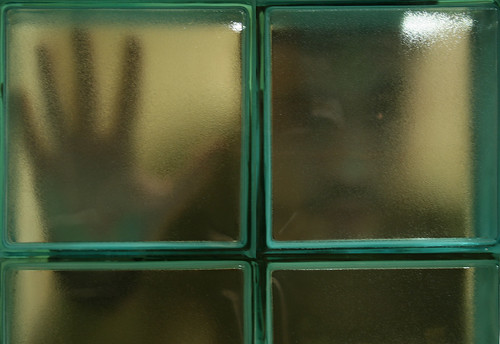
It wouldn't be a close up, but this is the type shot we would want, of the man/woman behind the window. With lightning flashing and his/her face illuminating for a second, a frightening moment would be created.

Coursework!

The posts from here on will be related to my coursework. Enjoy!

Sunday, November 8, 2009

Evaluation of Opening Sequences - Form and Function

i) What forms can opening sequences take? Can you list the conventional features of opening sequences?

- Opening sequences are all unique in their own ways and they are created in a certain way to relate and get forward the genre and type of film it is. They do however, have conventional questions answered that appear in most opening sequences, just in different ways; Who, what, where and when. They introduce where the story is located, and include establishing shots usually to give the viewer a good idea of where the story is set. When the film is usually set in the start of the film, with the environment and people in it usually giving an idea to whether the film is set in the past or is more contemporary, or even in the future. The who is answered by introduction of the main characters and their personalities, as well as their roles in the film. The what is the plot, which is not always uncovered in the opening sequence but is often hinted at with many signs.

ii) What narrative functions of opening sequences can you identify?

- The opening sequence doesn't give away the plot but introduces it in an attractive way so that the viewer wants to watch on. It sometimes introduces it straight away, but often is introduces the characters and setting first to set the scene of the film, and give an insight to the characters. It makes the viewer wonder the rest of the story without making the story obvious, to make them watch on. the characters are introduced, but their past is usually not, especially if it contains something relevant to the unfolding of the story, giving a vague appearance of the characters. The opening usually informs us of what and where the film starts from, so that we can relate to it and understand it more.


iii) What do audiences gain from watching the opening sequence?

- The audience understand the aspects that affect the story from watching the opening sequence, and then can decide if they want to continue watching the film. The opening sequence usually excites or compels the audience in such a way that they want to continue watching the film. They take in what happens in the film by gaining knowledge of the location, time and characters in the film, and guess what the outcome could be, and then find out by continuing the film.

iv) What do film-makers gain from including an opening sequence?
- Film-makers can gain from including an opening sequence as it sets the scene of the film, introducing the characters and location. This sets the base of the film up so that the rest of the film can be continued swiftly without needing to explain and inform each of the factors individually, which takes up time. The opening sequence can also be used to fit conventional genres and can portray a certain genre by the shots used, as well as the music and lighting combined with the location and characters. The opening sequence of an action-adventure film for example, would need to be so gripping and exciting that the audience wants to watch the rest and find out the resolution, or even just the main problem.