After development on the webcam idea another proposal for an opening was instead of a webcam, there would be messages left on the answering machine for someone to come home to. The gist of the idea for this is on the group blog, see the links on the side for the Coursework Group Page.
The idea was to have two narratives that in the end entwine and become almost one, from the point of view of the 'victim' which is the girl and the other from the POV of the 'villain' which is the man walking down the street. As the messages go along, the panic in the voice of her friend (the one leaving the voice mails) gets worse and worse until she hears someone come into the house, and screams as they take her/kill her, we leave this ambiguous. The main girl then becomes scared, as the man is still walking to somewhere, which we at the end find out is her house. The doorbell rings or she hears something as he gets there, her face frozen, and then the title of the film will end the opening.
Inspiration for the build up comes from the opening to Scream, as Drew Barrymore gets more and more frantic on the phone, and then she hears the doorbell ring.
Seems like the strongest idea to me, and the most 'doable' idea for the opening.
Showing posts with label Research. Show all posts
Showing posts with label Research. Show all posts
Tuesday, January 26, 2010
Ideas
One of the first ideas I had was of the webcam and two people talking through instant messenger or facebook, something like that. It didn't have to be two girls but the main girl that was being focused on would have to be a girl, innocent and vunerable looking. The other person on the other side of the conversation could be a anyone, a girl mate of hers, a boy mate of hers, her boyfriend, her brother in uni etc.
This idea was discussed in the first group meeting we had, and it was after this that I had some ideas about what would happen. The girl looks down or behind her, maybe she hears a window move, and then as she looks back she see's the persons gone and the webcam is on its side, still knocking on its side as she looks. She waits, asking where the other person is, and then maybe she see's someone in the reflection of her screen, her friend just outside the window. This startles her, along with some other noises, until at the climax of the scene the title of the film pops up.
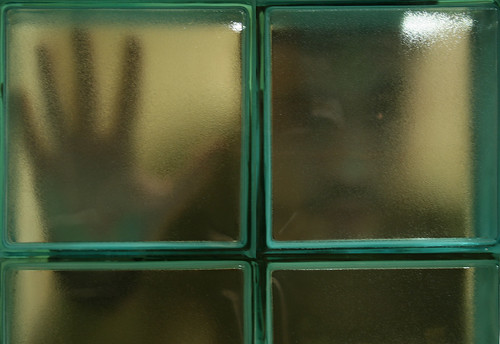
 It wouldn't be a close up, but this is the type shot we would want, of the man/woman behind the window. With lightning flashing and his/her face illuminating for a second, a frightening moment would be created.
This idea was discussed in the first group meeting we had, and it was after this that I had some ideas about what would happen. The girl looks down or behind her, maybe she hears a window move, and then as she looks back she see's the persons gone and the webcam is on its side, still knocking on its side as she looks. She waits, asking where the other person is, and then maybe she see's someone in the reflection of her screen, her friend just outside the window. This startles her, along with some other noises, until at the climax of the scene the title of the film pops up.
Sunday, November 8, 2009
Evaluation of Opening Sequences - Form and Function
i) What forms can opening sequences take? Can you list the conventional features of opening sequences?
- Opening sequences are all unique in their own ways and they are created in a certain way to relate and get forward the genre and type of film it is. They do however, have conventional questions answered that appear in most opening sequences, just in different ways; Who, what, where and when. They introduce where the story is located, and include establishing shots usually to give the viewer a good idea of where the story is set. When the film is usually set in the start of the film, with the environment and people in it usually giving an idea to whether the film is set in the past or is more contemporary, or even in the future. The who is answered by introduction of the main characters and their personalities, as well as their roles in the film. The what is the plot, which is not always uncovered in the opening sequence but is often hinted at with many signs.
ii) What narrative functions of opening sequences can you identify?
- The opening sequence doesn't give away the plot but introduces it in an attractive way so that the viewer wants to watch on. It sometimes introduces it straight away, but often is introduces the characters and setting first to set the scene of the film, and give an insight to the characters. It makes the viewer wonder the rest of the story without making the story obvious, to make them watch on. the characters are introduced, but their past is usually not, especially if it contains something relevant to the unfolding of the story, giving a vague appearance of the characters. The opening usually informs us of what and where the film starts from, so that we can relate to it and understand it more.
iii) What do audiences gain from watching the opening sequence?
- The audience understand the aspects that affect the story from watching the opening sequence, and then can decide if they want to continue watching the film. The opening sequence usually excites or compels the audience in such a way that they want to continue watching the film. They take in what happens in the film by gaining knowledge of the location, time and characters in the film, and guess what the outcome could be, and then find out by continuing the film.
iv) What do film-makers gain from including an opening sequence?
- Film-makers can gain from including an opening sequence as it sets the scene of the film, introducing the characters and location. This sets the base of the film up so that the rest of the film can be continued swiftly without needing to explain and inform each of the factors individually, which takes up time. The opening sequence can also be used to fit conventional genres and can portray a certain genre by the shots used, as well as the music and lighting combined with the location and characters. The opening sequence of an action-adventure film for example, would need to be so gripping and exciting that the audience wants to watch the rest and find out the resolution, or even just the main problem.
- Opening sequences are all unique in their own ways and they are created in a certain way to relate and get forward the genre and type of film it is. They do however, have conventional questions answered that appear in most opening sequences, just in different ways; Who, what, where and when. They introduce where the story is located, and include establishing shots usually to give the viewer a good idea of where the story is set. When the film is usually set in the start of the film, with the environment and people in it usually giving an idea to whether the film is set in the past or is more contemporary, or even in the future. The who is answered by introduction of the main characters and their personalities, as well as their roles in the film. The what is the plot, which is not always uncovered in the opening sequence but is often hinted at with many signs.
ii) What narrative functions of opening sequences can you identify?
- The opening sequence doesn't give away the plot but introduces it in an attractive way so that the viewer wants to watch on. It sometimes introduces it straight away, but often is introduces the characters and setting first to set the scene of the film, and give an insight to the characters. It makes the viewer wonder the rest of the story without making the story obvious, to make them watch on. the characters are introduced, but their past is usually not, especially if it contains something relevant to the unfolding of the story, giving a vague appearance of the characters. The opening usually informs us of what and where the film starts from, so that we can relate to it and understand it more.
iii) What do audiences gain from watching the opening sequence?
- The audience understand the aspects that affect the story from watching the opening sequence, and then can decide if they want to continue watching the film. The opening sequence usually excites or compels the audience in such a way that they want to continue watching the film. They take in what happens in the film by gaining knowledge of the location, time and characters in the film, and guess what the outcome could be, and then find out by continuing the film.
iv) What do film-makers gain from including an opening sequence?
- Film-makers can gain from including an opening sequence as it sets the scene of the film, introducing the characters and location. This sets the base of the film up so that the rest of the film can be continued swiftly without needing to explain and inform each of the factors individually, which takes up time. The opening sequence can also be used to fit conventional genres and can portray a certain genre by the shots used, as well as the music and lighting combined with the location and characters. The opening sequence of an action-adventure film for example, would need to be so gripping and exciting that the audience wants to watch the rest and find out the resolution, or even just the main problem.
Friday, November 6, 2009
Applying Barthes Theory to 'Phonebooth'
Barthes proposed his theory on narrative structure saying that a text would run through. These were the Action, Semantic, Enigma, Referential and Symbolic codes.
Action Code - depicts the events that take place in the narrative.
- We find out that it's set in New York, and we can see the environment the main character's in with the busy streets and the noise of everyone talking, with the establishing shots of all over new York city. The tall sky scrapers and billboard avdertisements shows it is a very modern film, contemporary, which is emphasised with the shots of everyone on a mobile. The narrator introduces us to the setting and then the main character Stu, and then we start to discover more about him through they way he is in the film.
Semantic Code - Refers to character and characterisation. The actions in the story are explained by the character's viewpoint of the events.
- The first person we are introduced to is Stu. You can see he's a middle aged man, he wears a good suit and is first seen on the phone. From this point we learn important things about him and the important factors in the film; his way of talking to his assistant and on the phone is confident and arrogant, so you get an insight into his personality. He wears a flash suit with sunglasses becuase he likes to look good, and has his assisstant follow him around making him feel inferior to Stu.
Enigma Code - involves the setting up of a mystery, its development and its resolution.
- We wonder what link the phonebooth has to Stu in the film, esp as we see him first talking on his own mobile phone in a modern world, and so we wonder how the phonebooth comes into the film. Once he enters the phonebooth, the mystery is of who is calling him and why. The voice to no name and no face adds to the tension and mystery of the situation.
Referential Code - involves explaining or informing.
- The narrator at the start of the film acts as a more literal informer, introducing us to the location and the character which bring the audience straight into the film. The number of people on phones at the start shows that it is going to play a big part in the film, and the busy streets packed with all sorts of people shows how anything could happen, and on such a busy day it could happen to anyone.
Symbolic Code - involves the reading of connotations of signs which transforms them into symbolic representations.
- Stu symbolises over-confidence and arrogance, and how it can lead to trouble. At the start he gets away with losing a customer by promising them business, and then takes off his wedding ring to talk to his girlfriend tro escape from the guilt of cheating. This makes you think the film is about this coming back to haunt him, and about him getting punished for this.
Thursday, November 5, 2009
Applying Levi-Strauss' Theory to Opening Sequences
Levi-Strauss had a theory that the narrative of a film was made up of units that were all related in binary opposites.
Pale Rider (eastwood 1985)
Loud v Quiet
Innocent v Destructive
Fighting v Defending
Peaceful v Disruptive
Light v Dark
Good v Bad
Slow, stationary villagers v Fast paced horses
Night v Day
Life v Death
Men v Women
Group v Lone Man
Victim v Villain
Calm setting v Sound of horses
Slow pan at start v Whip Pan to follow action
Rich v Poor
Powerful v Defenceless
Die Hard (McTiernan 1988)
Busy Airport v Calm party
Safety v Danger
New York v L.A.
Love v Conflict
Man v Woman
Good v Evil
Life v Death
Happiness v Sadness
American v German
Novice Limo driver v Experienced cop, Bruce Willis
Victim/Hero v Villains
Work life v Home life
Celebration v Arguments
Prepared, organised villians v Unprepared Bruce Willis, bare feet in vest
Talkative driver v Quiet Bruce Willis
Pale Rider (eastwood 1985)
Loud v Quiet
Innocent v Destructive
Fighting v Defending
Peaceful v Disruptive
Light v Dark
Good v Bad
Slow, stationary villagers v Fast paced horses
Night v Day
Life v Death
Men v Women
Group v Lone Man
Victim v Villain
Calm setting v Sound of horses
Slow pan at start v Whip Pan to follow action
Rich v Poor
Powerful v Defenceless
Die Hard (McTiernan 1988)
Busy Airport v Calm party
Safety v Danger
New York v L.A.
Love v Conflict
Man v Woman
Good v Evil
Life v Death
Happiness v Sadness
American v German
Novice Limo driver v Experienced cop, Bruce Willis
Victim/Hero v Villains
Work life v Home life
Celebration v Arguments
Prepared, organised villians v Unprepared Bruce Willis, bare feet in vest
Talkative driver v Quiet Bruce Willis
Thursday, October 15, 2009
Propp's Narrative Theory - the Matrix
Vladimir Propp was able to create a theory for almost all fictional stories by deconstructing and analysing Russian fairytales and folktales. His theory was that all stories had up to 31 functions, which would happen at some time in the story, and in the order stated. He concluded that each story and fairytale would have only 7 main characters:
1) Villain - challenges or opposes the hero
2) Donor - gives the Hero a magical object and prepares him
3) Helper - helps the Hero during the quest
4) Princess and her Father - marries the Hero, often sought for during the story, rewards the Hero
5) Dispatcher - sends the Hero off into the journey, often makes the 'lack' known
6) Hero - reacts to the donor, marries the Princess
7) False hero/Usurper - takes credit for Hero's actions, tries marrying Princess
Propp's theory in The Matrix
Characters
Villian - The Agents
Donor - Morpheus
Helper - Trinity
Princess - Trinity
Dispatcher - Morpheus
Hero - Neo (Thomas Anderson)
False Hero/Usurper - Cypher
Functions
2) Interdiction - Neo is warned by Trinity that he is being watched.
3) Violation of Interdiction - he doesn't get into the scaffolding, and the Agents get to him.
6) Trickery - Neo is questioned by Agent Smith, and asked to help capture Morpheus by making him look like a dangerous terrorist and mkaing them look like they are his friends.
9) Mediation - Neo introduced to Morpheus, and given choice of the real world or to stay in the matrix.
10) Beginning counter-action - He choses to enter the real world and join Morpheus, which changes his situation and the story.
12) First function of the Donor - Morpheus tests Neo with the fung fu program.
13) Hero's reaction - Neo tries to fight Morpheus and fails.
14) Receipt of Magical Agent - Neo is given the knowledge by Morpheus that the rules of the Matrix can be broken.
15) Guidance - Neo goes to see the Oracle in the Matrix.
16) Struggle - He goes to rescue Morpheus, beats the Agents initailly and then fights Agent Smith.
17) Branding - Neo is shot and close to death.
18) Victory - Agents defeated as Neo gets up and fights Agent Smith and defeats him.
19) Liquidation - Morpheus freed.
21) Pursuit - Neo fights the 3 agents after he is chases from subway.
22) Rescue - Neo is rescued just in time before the EMP is given off.
27) Recognition - Neo is recognized as the One.
28) Exposure - Cypher killed by Tank.
29) Transfiguration - Neo is given a whole new look at the end, he flies off right at the end showing he is the One.
Critic of Propp's Theory
There are problems with Propp's theory, many flaws which mean that it cannot be taken as a theory with which all story abide. Of the 31 points, not all of them appear in one story and many are skipped. Some are even put in different places to how he suggested the order would be, such as Cypher being revealed much earlier on in the film and not at the end as it suggests. Another function that never happens in the film is Neo marrying the princess, in this case Trinity, and taking any throne. This never happens, and there are actually occasions in many films where this doesn't happen at the end of the film. This is mainly because of the age of the theory, and that it fitted old folktales well but doesn't fit modern ones as they are very different to usual stories, to entertain and shock modern audiences more from old clichés. The characters also aren't all in the film, and they overlap so that there are only 5 main characters in the film taking the 7 different roles. However, this theory is quite good as many of the functions do fit the film even though some are repeated and some are in the wrong places; it is good for a theory so old to be proved correct to an extent in modern films.
1) Villain - challenges or opposes the hero
2) Donor - gives the Hero a magical object and prepares him
3) Helper - helps the Hero during the quest
4) Princess and her Father - marries the Hero, often sought for during the story, rewards the Hero
5) Dispatcher - sends the Hero off into the journey, often makes the 'lack' known
6) Hero - reacts to the donor, marries the Princess
7) False hero/Usurper - takes credit for Hero's actions, tries marrying Princess
Propp's theory in The Matrix
Characters
Villian - The Agents
Donor - Morpheus
Helper - Trinity
Princess - Trinity
Dispatcher - Morpheus
Hero - Neo (Thomas Anderson)
False Hero/Usurper - Cypher
Functions
2) Interdiction - Neo is warned by Trinity that he is being watched.
3) Violation of Interdiction - he doesn't get into the scaffolding, and the Agents get to him.
6) Trickery - Neo is questioned by Agent Smith, and asked to help capture Morpheus by making him look like a dangerous terrorist and mkaing them look like they are his friends.
9) Mediation - Neo introduced to Morpheus, and given choice of the real world or to stay in the matrix.
10) Beginning counter-action - He choses to enter the real world and join Morpheus, which changes his situation and the story.
12) First function of the Donor - Morpheus tests Neo with the fung fu program.
13) Hero's reaction - Neo tries to fight Morpheus and fails.
14) Receipt of Magical Agent - Neo is given the knowledge by Morpheus that the rules of the Matrix can be broken.
15) Guidance - Neo goes to see the Oracle in the Matrix.
16) Struggle - He goes to rescue Morpheus, beats the Agents initailly and then fights Agent Smith.
17) Branding - Neo is shot and close to death.
18) Victory - Agents defeated as Neo gets up and fights Agent Smith and defeats him.
19) Liquidation - Morpheus freed.
21) Pursuit - Neo fights the 3 agents after he is chases from subway.
22) Rescue - Neo is rescued just in time before the EMP is given off.
27) Recognition - Neo is recognized as the One.
28) Exposure - Cypher killed by Tank.
29) Transfiguration - Neo is given a whole new look at the end, he flies off right at the end showing he is the One.
Critic of Propp's Theory
There are problems with Propp's theory, many flaws which mean that it cannot be taken as a theory with which all story abide. Of the 31 points, not all of them appear in one story and many are skipped. Some are even put in different places to how he suggested the order would be, such as Cypher being revealed much earlier on in the film and not at the end as it suggests. Another function that never happens in the film is Neo marrying the princess, in this case Trinity, and taking any throne. This never happens, and there are actually occasions in many films where this doesn't happen at the end of the film. This is mainly because of the age of the theory, and that it fitted old folktales well but doesn't fit modern ones as they are very different to usual stories, to entertain and shock modern audiences more from old clichés. The characters also aren't all in the film, and they overlap so that there are only 5 main characters in the film taking the 7 different roles. However, this theory is quite good as many of the functions do fit the film even though some are repeated and some are in the wrong places; it is good for a theory so old to be proved correct to an extent in modern films.
Thursday, October 8, 2009
Todorov's Theory
Applying Todorov's Theorum to the opening sequence of the Shawshank Redemption.
1/ - Protagonist and antagonist.
The protagonist in the film is Tim Robbins, as he is the one who is shown throughout the start of the film, the one who is on trial and the life on which the film revolves around, with him going to prison for life. The antagonist is not clear at the start, as in a way it is the affair between his wife and the golfer. But it becomes clear soon into the introduction that the antagonist in the film for Tim Robbins is going to be jail, and managing to survive.
2/ - Describe the Equilibrium. How is it represented? What kind of camera shots can you identify? Describe the mise-en-scene.
The equilibrium is one thing not set at the start of the film, but is rather just assumed as it goes straight into the disequilibrium, and the cause of it. The equilibrium is therefore not meant to be as important or significant, suggesting that it is just as any other equil. would be, that there is nothing special about this one.
It starts off with an establishing shot of the outside of the mansion and then slowly moves towards the car and then into a MCU on the side of the character to get a look at the main character, and the blank but painfull expression on his face. It then cuts away to a close up of the gun being taken out of the glove compartment and opened on his lap. However, he doesn't start filling the gun yet, and leaves that to suspense as he picks up his bottle and starts drinking it instead, in an MCU of the front of the character. The scene then cuts to another close but this time of him in a court, wearing his clothes a lot more smartly and his hair done a lot more neatly. It then switches between CU of the main character and a LMS of the laywer questioning him. It then reverts back to the shot in the car, with the situation getting more serious as the bullets are put into the gun slowly, one my one. This all happens with the background conversation of the courtroom continuing, and the main character continues speaking. This shows that the shots are both flashbacks of the past, and he is just recalling the incident as he tells the judge about it. The LMS of the laywer then turns to a CU of the lawyer as his case becomes even stronger, and Tim Robbins fate is sealed. Once the courtroom scene is over, the scene then moves on to the main place in the film, the place where most of the film actually does take place which is the prison. It starts off in the inside, so you do not know of where it is or what it looks like, but have just a hunch as Morgan Freeman walks in wearing traditional prisoner clothes. Here again the MS to CU movement is used to hone in on the main characters and concentrate on them alone. A third type of shot used is the establishing shot for the prison, to show how large it was compared to the people in it which was shown by following the van in and then going up and showing the entire front of the prison before going over it and swiveling around the men on the ground going towards the entrance. this establishing shot is an extreme long shot that goes over the whole area and shows the many buildings, covering a large area and ending up as a vast establishing shot.
The mise-en-scene of the opening starts off dark and gloomy, to signify the night. the lighting is minimal, with none of them being bright and mst of them coming from the house in the distance. This added to the sad, almost expression-less face of Tim Robbins in the car creates a sort of sinister shot, with his senses being weakened. The courtroom scene is however the opposite in the way that it is day with a lot of light, the walls are white and though the face of Tim Robbins still seems sad, it seems slightly more alive with thought and seems to understands its surroundings more than what see see in the car. The dull colours of the clothing and the prsion itself show how it to be a dull place, where colour or true happiness is rarely seen. There are no bright colours or bright lights at all so far, all the lighting is pretty much natural and what is not is minimal with little effect, which creates a dark and realistic experience in the film and not one out of fairytales.
3/ - Disruption/Disequilibrium?
The disequilibrium is not subtly hinted or set up to happen in the film, it jumps straight into the disruption of him going to jail for a life sentence. The rest of the story is to do with this disequilibrium, and how he manages to cope with the change.
4/ - Hero's journey?
The hero's journey in the film is hinted from the start as to being able to get through his life at the prison. The court scene where he is pleading that he did not actually do something could make the audience think that he may spend his time there trying to prove that he was innocent the whole time, or try to get out of the prison by one way or another. Morgan Freeman's journey is one from someone already inside the prison, who looks like he could be the one person that could help Robbins in whatever he wants to prove or do. The fact that Morgan Freeman is rejected early parole after being there for 20 years gives a hint that it could take Robbins even longer to get out unless he does something fast.
5/ - What is the new equilibrium?
The equilibrium is restored by Robbins actually escaping from the prison and getting back his life that he had been deprived of for 20 years. The new equilibrium is one similar to the start but one where he is actually happy with his life, and one after the things he has learnt from his long experience in the Shawshank Prison.
Tuesday, October 6, 2009
Principles of Continuity
The scene starts with a MCU of Will Smith dialling on the phone, when it cuts to a C of his supervisor calling him away to the office, which is when it whip pans at an angle to a close up of Will Smith, then cutting to a CU from in front of him. The CU shows the shock on his face, how he doesn't really know how to respond. The anxiety is seen with the close up, which increases the intesity of the scene and helps the audience understand more about how he feels. The camera then follows him in a MS while he gets up, puts on his jacket with his whole body shaking, and walks away to the office. The shot is focused on him putting on the jacket only, which is why the rest of the frame is out of focus and blurred. He then walks off, with this particular shot following him and ending in a MLS, to show that he has moved away towards the office which keeps the flow going and keeps to the continuity of the scene. The board members are seen through the glass walls in the background, to include them into the scene. This is the master shot of the office, which is used again.
It then cuts to a MS as he walks into the room, with a match on action as the cut is in perfect time with him entering. The boss is then introduced into the conversation with it cutting to a MS of him, and then back and fourth between him and Will Smith a few times as they shake hands, before he shakes hands with the other board member. To re-establish the office scene but still keep with the continuity of the sequence, it cuts to the master shot of the 4 people in the board room with the office noise in the background to show the surroundings once more, as he still moves on to shake the 3rd person, keeping with the match on action rule.
Once he sits down, it uses the over the shoulder shot on both sides of the conversation to show both points of view. It uses this technique repeatedly to give the effect of a shot-reverse-shot, cutting between both characters and the conversation to put the audience in the action of the scene. The shots go from MS shots of both to an MCU of the boss, before cutting to a CU of Will Smith to show the emotion on his face, and make it even more powerful so that the audience can see how he holds back his tears and stops himself from crying which is the main emphasis of the shot. This CU also seems to slow down the shot, before reverting back to normal as he gets up and shakes their hands before leaving the room. The whole conversation in the room keeps with the 180 degree rule, as they showed both ends of the conversation but did not break the rule, another factor in the sequences continuity.
There is a matched cut as he walks out of the room, with both shots flowing together perfectly. The MS is carried on as he walks through, which is then cut to a CU of him walking. This shot is just the same as the MS but focus only at his face, and so it doesn't break the 30 degree rule either. The shot carries on to him going to his desk, where it cuts to a side angle of him stumbling to get his things before reverting to the same shot continued as he carries on walking out. Reverting to the same shot again is another technique with goes with the continuity of the scene. It then cuts to him walking straight outside, but this works well as his walking motion is kept the same so the idea of him having walked straight through the building is given. Here is gives an MLS of him and even though he is in a crowd, it manages to focus on him.
This sequence is one done very well, with the editing being flawless as none of the continuity rules are broken once, and the whole scene flows together perfectly with the match on action and 180 degree rules kept very well, with the cutting of shots at the right time to not make them too quick and to allow the emotion to be seen on Will Smith's face; The principles of continuity are all seen in this sequence.
Accident Sequence Evaluation
1/ -What did you think was the point to the activity?
- The point of this activity was to learn how to put a selections of shots together to create a sequence of continuity, using only six shots from all different angles and showing different parts of the sequence. We had to make a short sequence in which an accident takes place as the focus of the shot.
2/ - In regards to the finished sequence, what works well?
- The opening pan gives a really good idea of the environment around the main character, and even manages to show the reason for the accident, the cone, in the corner of the scene. It sets the scene as an establishing shot, even though the position of the character is somewhat abstract to the next scene.
- The timing of the shots gives a sense of continuity; he hasn't run too far from when it goes from the 2nd shot to the 3rd, and so you can feel it being one whole continuous sequenc. The match on action ensures the viewer that no time has passed between the shots. However, this was not perfectly maintained throughout the sequence.
- There is a whole variety of shots, from the establishing shot to the mid shot at a low angle, focusing on the action of him running. The hand held shot stood out and gave the viewer the experience in the runners view, before it coming back to a mid shot as he falls over, to make the ending a bit more comical. The shots are taken from in front of the runner and behind him, to give a variety of angles.
- They don't break any of the rules, such as the 180degree rule, as the shots are all filmed from the right side of the runner, with the shots being taken from the 2 extremes of the 180 degrees but not beyond it.
3/ -What would you improve about the sequence?
- The opening scene is effective as an establishing shot, but takes a bit too long as it pans too slowly. Also, the end of the shot is irrelevant to the next scene and so defeats the continuity of the sequence at the start. I would've had him in the starting position or kneeling down, getting into the position into the first shot so the second one flows together properly.
- The rest of the shots are taken well but are not long enough, and don't have the match on action done well, as he falls over the cone while he was still far away from it at the end of the last shot, meaning that it looks like time has passed between the shots. This ruins the conituity of the shots. they should have just been a bit longer and they would have gone together well.
4/ -What did you learn from doing this activity?
- I have learnt that the cutting of shots at the right time is truly hard, and slightly bad timing can make the whole scene look like its not continuous.
- I've also learnt of the rules that should not be broken, such as the 180 degree rule, and how to create the effect that match on action enables, and how without them a scene can not be as effective.

Wednesday, September 23, 2009
Comparing Two Opening Sequences: 'Legally Blonde' with 'Se7en'
Narrative Expectations
Legally Blonde
- It starts of with her blonde hair, slowly being combed to show that the main character is blonde and a girl, straight away. The expectation of her to be a 'typical blonde' comes up, and the meaning of the movie title is shown straight away
- It has close-ups of her getting ready; doing her legs, the perfume, necklace, all of her shoes and possessions in different shades of pink. This shows that she is a very bubbly, girly teenager maybe.
- The girl on the bicycle shows how the campus on which she lives is very expensive, exclusive to those higher and richer in society. The fountain and houses give the look of perfection and bliss around the campus.
- The boys playing about in the garden that cheer as the girl goes past shows the stereotype set in this film, with the boys showing their rugged masculinity with them all being topless and in a sort of brawl. The girls here are all for show, all about physical perfection and looking fabulous for boys.
- This is seen further as the girls go around the sorority house and you see all the girls working out or trying to look good, with the steam-filled powder room full of girls putting make-up and cream on.
- We see that the main character is popular, with the Homecoming Queen banner up him her room and the fact that everyone was signing her card, no-one was saying no but was excited to sign it for her.
- The boy at the end shows her love interest, and with prior knowledge with these kind of films you can guess that something will go wrong with the boy, especially with the girls giving her a 'Good Luck' card.
Se7en
- It starts off with him getting ready, in silence on his own in his apartment. You can hear nothing but the busy streets outside, and see a chess board in the distance giving a sense of him being an intellectual.
- We have a close up of Morgan Freeman's character getting ready, doing his tie slowly, and picking up his suit from the perfectly laid bed. Everything looks sorted and regular, like someone who is used to doing something in their own way.
We get a contrast with Brad Pitt, as he comes in as an opposite to Morgan Freeman; young and not so neatly dressed, and with some style and urgency in the way he walks and talks, unlike the slow way in which Morgan Freeman talks and thinks about things.
- We see death upfront from the start of the film, showing what they both do and also showing how death will be a major factor throughout the film, not something to be anticipated only for the end of the movie.
- The way in which Morgan Freeman is treated by his first partner shows how he does things his own way, he asks questions beyond what other would understand any reason for and he thinks about things more than others would, trying to do a thorough job rather than trying to quick wrap it up like his partner.
- The way Brad Pitt enters we question why he has come, just as Morgan Freeman does, and find out how he has only come for a week, and also find out of Freeman's retirement in a weeks time, so the film is only about these seven days.
- The conversation with Brad Pitt in the loud street edge contrasts the apartment straight after, when it is absolutely silent but Morgan Freeman still finds it hard to fall asleep, he needs the help of a metrodome to fall to sleep, again giving an example of his life being regular and how the entry of Brad Pitt could be a change in that regular lifestyle.
Character Information
Legally Blonde
- We can see from the start that the main girl is the one whose identity is hidden till the end of the opening sequence, Elle.
- We find out all about her appearance without once seeing her face, by seeing her legs, the dress and shoes she's wearing, the necklaces, the perfume and her blonde hair.
- Her favourite colour is shown to be pink, with everything in different shades of pink around the room.
- She is clearly rich as she has Prada bags in her room and expensive looking clothes and shoes, as well as living in such an exclusive looking campus.
- She's popular, with the homecoming queen banner on her wall and everybody signing a card for her, and she looks like a very likeable person.
- The end of the opening sequence shows her kissing a picture of her boyfriend, showing how her love interest in the film also plays a big part.
Se7en
- Morgan Freeman looks like a very calm character, there is nothing eccentric about him. He sets out all of his clothes in an orderly fashion, and likes doing everything slowly and precisly in his own way.
- He seems intellectual, with his question being outside the box, more than the understanding of any common person. He is not a popular person like Elle in Legally blonde, with his co-workers quite rude to him and question his style of working, maybe because they just don't understand him.
- He is the wisdom in the film, he shows the age and rank that Brad Pitt lacks, and portrays the greatest saying 'with age comes wisdom'.
- Brad pitt plays the part of the new comer, but not just the usual apprentice; he is different from all the rest. His demeanor of a young cop coming in with a leather jacket was not really seen before, and so he was the contrast in the film with Morgan Freeman, representing 'new thinking'.
- We see that Morgan Freeman's character is very lonely in the film, he sleeps alone in his bed, he lives alone and in regards to the way he is treated by his co-workers, he even likes to work alone. We find out more about him that Brad Pitt in the start of the film, maybe suggesting that he is the more important of the two characters.
Shot Types
Legally Blonde
- It starts of with a close up if the main character's hair, and the fact that it's blonde. This fills the whole frame up, and allows very little room for anything else to be seen, to show the importance of the hair and make the shot a lot more extreme.
- It then has many of these cut into the sequence showing different aspects of her getting ready, to show how long it takes for her to make herself up, that looking good is a very important thing to her.
- There is an establishing shot with the girl on the bicycle, showing the fountain that she appears out of, then going past the houses and the boys in the garden. This shows the environment that the girl lives in, and also gives the scene with the boys cheering the girl on the bicycle. It then ends with her riding into the campus, where we see it in the background, and see the name in the foreground.
- Once inside, it has a few shots following the girl that is getting the card signed, almost as if we were looking from her eyes and seeing all the things around. This envolves the audience a lot more and gives the shot a more real view, seeing around as if we were there.
- There is another shot following the girl from above, and then spiralling with her as she goes up the staircase, showing the different things that the house is made up of, the girls going past all giddy, the huge bouquet of flowers in the middle, and the elegant staircase itself. This then leads well to a close up of the flowers in the room of the main character, showing how she thinks similar to all the others and how they like very much the same things.
Se7en
- It starts of with close ups of Morgan Freeman getting ready, to establish that he is one of the main characters in the film. The close up shots are also mixed in with other shot types to give a sense of his character in the filmare like, their true identities.- Legally Blonde builds up the character different likes and dislikes, whereas Se7en does the opposite, showing the characters straight away an, right at the start.
- There is the typical shot from above of the dead body in the apartment, showing the blood and disfigured body of the victim.
- The entry of Brad Pitt starts off from far and then moves into him as he walks up the stairs, and then we have a close up of him, also establishing his importance in the film.
- The conversation between the two is not a normal level mid shot like usual, but it is at a low angle. This emphasises the rain that is pouring down, and gives the feeling that the rain is falling down on the audience itself, and makes the first encounter even more miserable. We don't know where things could go from here.
Comparison
- Both films have very different opening sequences, with one giving more information on the surrounding and main character, and the other doing the same but with less shots, and with more conversation to actually find out what the characters d giving a sense of what the story could be about. We do not get much of a story outline or even much of a guess at the story in Legally Blonde as it is concentrated more on the people and the environment, unlike Se7en which goes into the story straight away; The introduction of Brad Pitt and the death of someone happening within the first few minutes.
- Both are very good opening sequences in their own way, and work well for the effect they were trying to achieve, going well with the movie genre.
Legally Blonde
- It starts of with her blonde hair, slowly being combed to show that the main character is blonde and a girl, straight away. The expectation of her to be a 'typical blonde' comes up, and the meaning of the movie title is shown straight away
- It has close-ups of her getting ready; doing her legs, the perfume, necklace, all of her shoes and possessions in different shades of pink. This shows that she is a very bubbly, girly teenager maybe.
- The girl on the bicycle shows how the campus on which she lives is very expensive, exclusive to those higher and richer in society. The fountain and houses give the look of perfection and bliss around the campus.
- The boys playing about in the garden that cheer as the girl goes past shows the stereotype set in this film, with the boys showing their rugged masculinity with them all being topless and in a sort of brawl. The girls here are all for show, all about physical perfection and looking fabulous for boys.
- This is seen further as the girls go around the sorority house and you see all the girls working out or trying to look good, with the steam-filled powder room full of girls putting make-up and cream on.
- We see that the main character is popular, with the Homecoming Queen banner up him her room and the fact that everyone was signing her card, no-one was saying no but was excited to sign it for her.
- The boy at the end shows her love interest, and with prior knowledge with these kind of films you can guess that something will go wrong with the boy, especially with the girls giving her a 'Good Luck' card.
Se7en
- It starts off with him getting ready, in silence on his own in his apartment. You can hear nothing but the busy streets outside, and see a chess board in the distance giving a sense of him being an intellectual.
- We have a close up of Morgan Freeman's character getting ready, doing his tie slowly, and picking up his suit from the perfectly laid bed. Everything looks sorted and regular, like someone who is used to doing something in their own way.
We get a contrast with Brad Pitt, as he comes in as an opposite to Morgan Freeman; young and not so neatly dressed, and with some style and urgency in the way he walks and talks, unlike the slow way in which Morgan Freeman talks and thinks about things.
- We see death upfront from the start of the film, showing what they both do and also showing how death will be a major factor throughout the film, not something to be anticipated only for the end of the movie.
- The way in which Morgan Freeman is treated by his first partner shows how he does things his own way, he asks questions beyond what other would understand any reason for and he thinks about things more than others would, trying to do a thorough job rather than trying to quick wrap it up like his partner.
- The way Brad Pitt enters we question why he has come, just as Morgan Freeman does, and find out how he has only come for a week, and also find out of Freeman's retirement in a weeks time, so the film is only about these seven days.
- The conversation with Brad Pitt in the loud street edge contrasts the apartment straight after, when it is absolutely silent but Morgan Freeman still finds it hard to fall asleep, he needs the help of a metrodome to fall to sleep, again giving an example of his life being regular and how the entry of Brad Pitt could be a change in that regular lifestyle.
Character Information
Legally Blonde
- We can see from the start that the main girl is the one whose identity is hidden till the end of the opening sequence, Elle.
- We find out all about her appearance without once seeing her face, by seeing her legs, the dress and shoes she's wearing, the necklaces, the perfume and her blonde hair.
- Her favourite colour is shown to be pink, with everything in different shades of pink around the room.
- She is clearly rich as she has Prada bags in her room and expensive looking clothes and shoes, as well as living in such an exclusive looking campus.
- She's popular, with the homecoming queen banner on her wall and everybody signing a card for her, and she looks like a very likeable person.
- The end of the opening sequence shows her kissing a picture of her boyfriend, showing how her love interest in the film also plays a big part.
Se7en
- Morgan Freeman looks like a very calm character, there is nothing eccentric about him. He sets out all of his clothes in an orderly fashion, and likes doing everything slowly and precisly in his own way.
- He seems intellectual, with his question being outside the box, more than the understanding of any common person. He is not a popular person like Elle in Legally blonde, with his co-workers quite rude to him and question his style of working, maybe because they just don't understand him.
- He is the wisdom in the film, he shows the age and rank that Brad Pitt lacks, and portrays the greatest saying 'with age comes wisdom'.
- Brad pitt plays the part of the new comer, but not just the usual apprentice; he is different from all the rest. His demeanor of a young cop coming in with a leather jacket was not really seen before, and so he was the contrast in the film with Morgan Freeman, representing 'new thinking'.
- We see that Morgan Freeman's character is very lonely in the film, he sleeps alone in his bed, he lives alone and in regards to the way he is treated by his co-workers, he even likes to work alone. We find out more about him that Brad Pitt in the start of the film, maybe suggesting that he is the more important of the two characters.
Shot Types
Legally Blonde
- It starts of with a close up if the main character's hair, and the fact that it's blonde. This fills the whole frame up, and allows very little room for anything else to be seen, to show the importance of the hair and make the shot a lot more extreme.
- It then has many of these cut into the sequence showing different aspects of her getting ready, to show how long it takes for her to make herself up, that looking good is a very important thing to her.
- There is an establishing shot with the girl on the bicycle, showing the fountain that she appears out of, then going past the houses and the boys in the garden. This shows the environment that the girl lives in, and also gives the scene with the boys cheering the girl on the bicycle. It then ends with her riding into the campus, where we see it in the background, and see the name in the foreground.
- Once inside, it has a few shots following the girl that is getting the card signed, almost as if we were looking from her eyes and seeing all the things around. This envolves the audience a lot more and gives the shot a more real view, seeing around as if we were there.
- There is another shot following the girl from above, and then spiralling with her as she goes up the staircase, showing the different things that the house is made up of, the girls going past all giddy, the huge bouquet of flowers in the middle, and the elegant staircase itself. This then leads well to a close up of the flowers in the room of the main character, showing how she thinks similar to all the others and how they like very much the same things.
Se7en
- It starts of with close ups of Morgan Freeman getting ready, to establish that he is one of the main characters in the film. The close up shots are also mixed in with other shot types to give a sense of his character in the filmare like, their true identities.- Legally Blonde builds up the character different likes and dislikes, whereas Se7en does the opposite, showing the characters straight away an, right at the start.
- There is the typical shot from above of the dead body in the apartment, showing the blood and disfigured body of the victim.
- The entry of Brad Pitt starts off from far and then moves into him as he walks up the stairs, and then we have a close up of him, also establishing his importance in the film.
- The conversation between the two is not a normal level mid shot like usual, but it is at a low angle. This emphasises the rain that is pouring down, and gives the feeling that the rain is falling down on the audience itself, and makes the first encounter even more miserable. We don't know where things could go from here.
Comparison
- Both films have very different opening sequences, with one giving more information on the surrounding and main character, and the other doing the same but with less shots, and with more conversation to actually find out what the characters d giving a sense of what the story could be about. We do not get much of a story outline or even much of a guess at the story in Legally Blonde as it is concentrated more on the people and the environment, unlike Se7en which goes into the story straight away; The introduction of Brad Pitt and the death of someone happening within the first few minutes.
- Both are very good opening sequences in their own way, and work well for the effect they were trying to achieve, going well with the movie genre.
Tuesday, September 22, 2009
Still Shot Evaluation
 1/ -This shot is of a young female teenager, as if she is hiding from something behind the brick wall. It is a medium close up shot with the girl is looking up into the right corner into the screen, the fear visible on her face. She's looking into the distance at something mysterious, looking for someone or thing. The close up shot is used to portray the expression on her face, making the still more intense, as she fears the unknown to her and the viewer. We can see from her face that she is hiding, maybe from an attacker, which shows that this is clearly a horror or thriller still. Her hand on the wall shows how she is all alone with nothing else for support, and shows her vunerabilty. The dull colours and minimal lighting all give the sinister sense of horror, with the dull colours represting the lack of life apart from the girl, a sense of lonliness.
2/ -To achieve this still we first had to find a place dark enough for the lighting put in to stand out. The back of the great hall was suggested, which was a good idea as it was very dark with some props even for us to use, such as the brick wall. We set up the camera at her height, only just lower to have it at a slight low angle. We tried a few shots without the night mode with normal colours coming through into the picture, but found this image when we switch it on and saw the dark and light colour contrast. The actress stood next to the wall resting behind it and looking up, with her eyebrows raised to show how scared she was.
3/ -I think that the nightmode really made this picture more successful, with the bland colours mixed with the scene making a typical horror still. The expression on the actress' face help a lot with making the shot more effective, as it showed her as a frightened victim. The lighting was effective as it made her stand out, and showed nothing but darkness behind her.
4/ -If I were to do this shot again, I may pick an angle above the actress, in a way as if it were really prying on her and she were being watched by us, but was totally unaware of it. I think I would also go more close up, and get the actress to show more fear on her face to express the fear of the situation, a bit more of an extreme shot. Even with a more close up shot, i would still try and include some of the blackness behind the victim, to show how lonely she in. I would also have experimented with the nightmode earlier, and have taken a wider range of images to choose from.
Subscribe to:
Posts (Atom)
